HBCU Creatives Are Our Keepers of Culture
HOW A GENERATION OF CREATIVES ARE PRESERVING OUR HISTORY.
Historical Context: In the late nineteenth century, when Hampton University was established, photography was taught alongside trades and industrial arts, reflecting an understanding that visual storytelling carried value beyond technical skill.
The Hampton Institute Camera Club emerged as one of the earliest organized photography groups connected to a historically Black institution.
At a time when mainstream images of Black life were shaped by racist stereotypes and exclusion, the club provided something different: the ability for Black people to represent themselves.
The significance of the Hampton Institute Camera Club was never simply about cameras. It was about authorship. It was about deciding who gets to document Black life, whose stories are remembered, and what images become part of history.
Below: Students at Hampton Institute work on a house built largely by them. Photo between 1899 and 1900

More than a century later, the purpose behind the Camera Club remains just as relevant.
The photographs, videos, campaigns, and creative projects produced on HBCU campuses become records of an era. What is documented and how it is documented shape how future generations understand these moments. These are more than posts for social media... They become archives that live far beyond the present.
Years from now, these images will tell stories that textbooks cannot. Some people capture moments. HBCU students capture culture.
While big campus moments such as homecoming, celebrity commencement speakers, viral performances, championship wins deserve attention, HBCU student creators ensure that we don't forget about the culture that exists in the moments in between.
That responsibility is not lost on today's creatives.
As Howard University student photographer Chris Smith explains:
“When it comes to my photos, it’s the people that make them special. Capturing our people in spaces as sacred as HBCUs, especially when you consider the history of why HBCUs even exist, is such a beautiful feeling for me as a photographer and as a Howard student. I think my favorite part about shooting Howard’s culture is having the ability to freeze time. These are moments that only exist for a second or two, but I’m able to make them last a lifetime through film photography. These moments don’t last forever, so I feel obligated to capture them when they do happen. Every moment means something.”
Below: Photos taken by Chris Smith last school year (2025-2026)


 HBCU students offer a deep understanding of the language, style, humor, and nuances that make each institution unique. Their work allows us to see ourselves more fully. It highlights the beauty, challenges, creativity, and complexity of Black communities with authenticity and care.
BRANDS TAKING NOTICE OF HBCU CREATIVITY
I recently came across a campaign created by student-founded creative agency, DAZE, at North Carolina A&T State University in collaboration with Topicals, a skincare brand known for creating products that address chronic skin conditions while celebrating self-expression and community. Organizations like DAZE expand a campaign's impact by documenting activations, promoting the work, and engaging additional student photographers, videographers, and production assistants.
The campaign itself highlights the care and responsibility students bring to brand partnerships. Rather than simply participating in a collaboration, students ensure that their creativity remains authentic and that they retain ownership of their narratives and style.
Below: Photos from the Topicals campaign by Natalie Dyson.


Cameron Elyse, recent graduate of NCAT and the creative director of the campaign, shared:
"The Topicals project was a statement to show that the talent is right here within HBCU communities that’s often overlooked. We create the sauce and recipe, environments like NCAT create an ecosystem where it’s a pool of so many talented, likeminded individuals who have vision with their art and the project was simply a platform to showcase it. I wanted to show how you don’t have to wait for the big brand work to validate your art but when you create work with intention, purpose, passion you’ll attract clients, collaborators who see it and want to be apart of that vision you’re building."
Decades from now, when people want to understand what this generation looked like, sounded like, wore, celebrated, and dreamed about, they will turn to the work these students created.
Because culture does not preserve itself.
People do.
Below: Spelman College captured by Morehouse alumnus Jordan Walls.
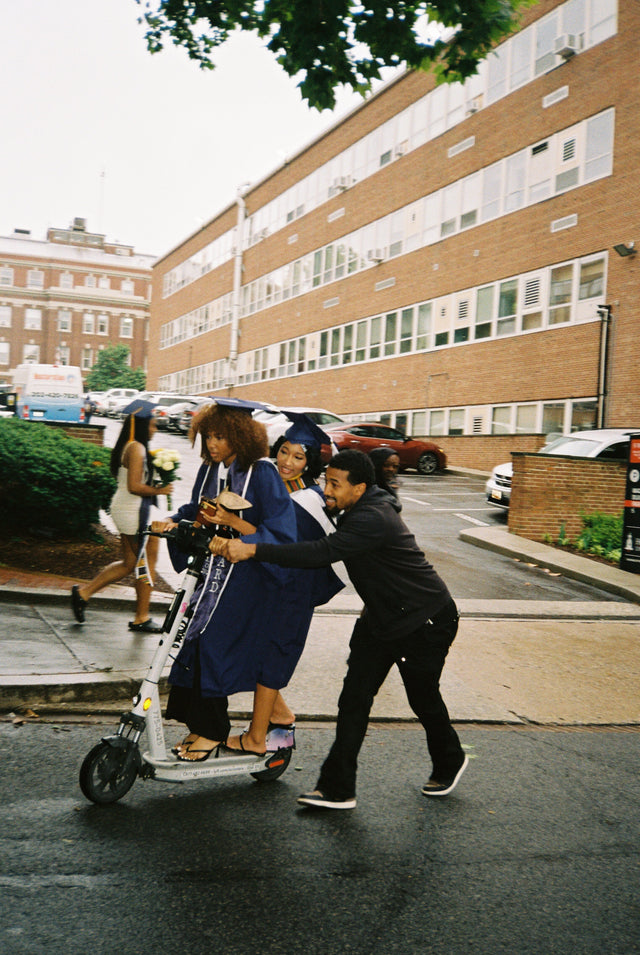
 Below: Howard University graduation captured by Morehouse alumnus Jordan Walls.


0 Comments
There are no comments for this article. Be the first one to leave a message!